


BJ Fogg – Tiny Habits
By Applied Change
Share


What I love about this book is its simplicity in both the concept and how to apply it in real situations. It shows us how we can more easily create new positive habits that help us to improve our happiness, health and wellbeing or to eliminate those habits that are working against us or hijacking our best intentions.
Whether the habit relates to work or home, the lessons apply equally well. All too often we rely heavily on motivation and will-power to get us there and this is the main reason that we mostly fail. This book and the underlying concept shows us a much easier way. Essential reading if you are interested in sustained behaviour change.
You can find the book along with other resources here:
Related content

Change Fatigue Isn’t Caused by Too Much Change
When a transformation programme loses energy, the instinctive explanation is that there’s simply too much change happening at once. It’s an appealing diagnosis because it feels analytically sound. The problem is it’s usually wrong. Here’s what actually causes change fatigue, and why acting on the wrong diagnosis tends to make things considerably worse.

The technology is not the transformation
Your people may understand the system perfectly and still have no reason to care about the transformation it is meant to enable.
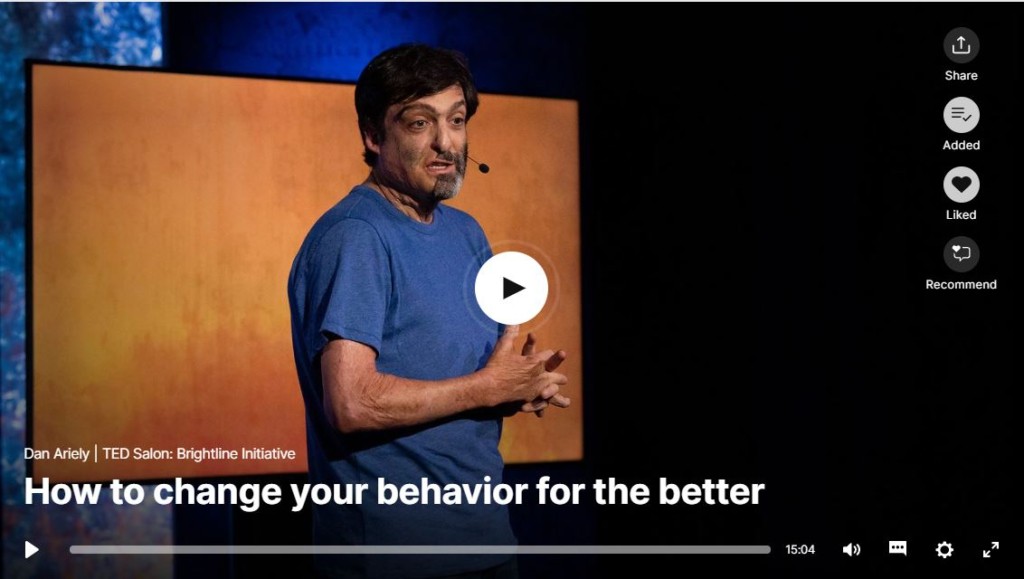
Dan Ariely: How to Change Your Behaviour for the Better
Why do our behaviours so often fail to live up to our good intentions? Some great tips and ideas to consider when making changes not only for ourselves but in those around us.

Rory Sutherland: Sweat the small stuff
Rory Sutherland discusses how our perception of things shapes our reality. This is an area of increasing focus for behavioural economics and in business. Understanding how we really behave and how irrational we are means that seemingly small and inexpensive changes can have a disproportionate effect on our behaviour and therefore the outcomes that result from it.

Leaders focus too much on changing policies, and not enough on changing minds
Whilst focusing on the harder aspects of a change, such as policies, processes, facilities, technology, training etc, what organisations typically overlook or at least pay too little attention to, is the human element, i.e. what we think and feel. And yet we’re increasingly learning that it’s one of the most fundamental contributors to successful outcomes.

[ninja_form id=6]
[ninja_form id=2]