


Professor Steve Peters – The Chimp Paradox
By Applied Change
Share


We love both the book and TED talk because the concept goes a long way towards explaining why our actions and behaviours often don’t live up to our good intentions. The recognition that different parts of our brain are operating simultaneously at any given moment, often in competition with each other, helps us to see our own emotions and behaviours and those of others around us in a whole new light. In our view this is essential reading for anyone who is looking to influence human behaviour or understand their own. For those who want a quick intro, clicking below will take you to his TED talk.
Related content

Satya Nadella – Hit Refresh
Think that some organisations are too big or too well established to change? Think again. Satya Nadella and the team at Microsoft of proven otherwise.
Dan Ariely – What Makes us Feel Good About our Work
An excellent TED by Dan Ariely on the importance of meaning to our motivation and therefore our level of engagement and creativity at work.

Leaders focus too much on changing policies, and not enough on changing minds
Whilst focusing on the harder aspects of a change, such as policies, processes, facilities, technology, training etc, what organisations typically overlook or at least pay too little attention to, is the human element, i.e. what we think and feel. And yet we’re increasingly learning that it’s one of the most fundamental contributors to successful outcomes.
Change Leadership – A best practice guide
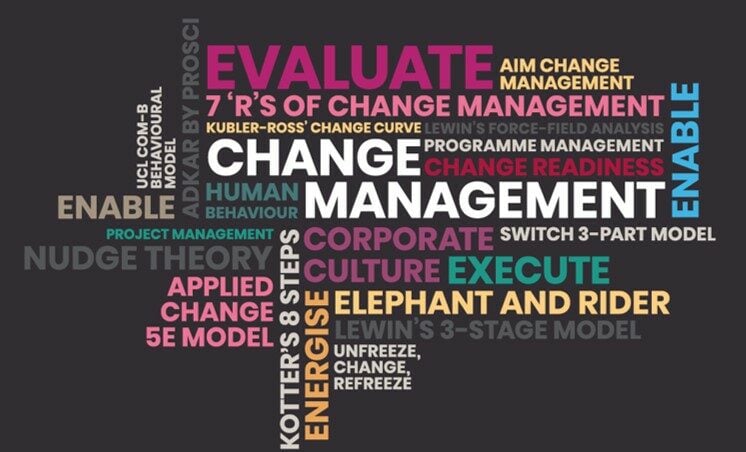
Change Management is the collection of approaches and methods used to influence human behaviour. There are countless models and books on the topic so we’ve summarised some of the main ones here.

[ninja_form id=6]
[ninja_form id=2]